
Technology Scouting: How AI Accelerates Emerging Tech Discovery, IP Landscape Mapping, and White Space Identification
Introduction Your R&D team has a brief: identify which emerging technologies are worth pursuing, which competitors are filing in adjacent domains, and where the open filing territory is. That is three separate workflows — traditionally three separate engagements — each...
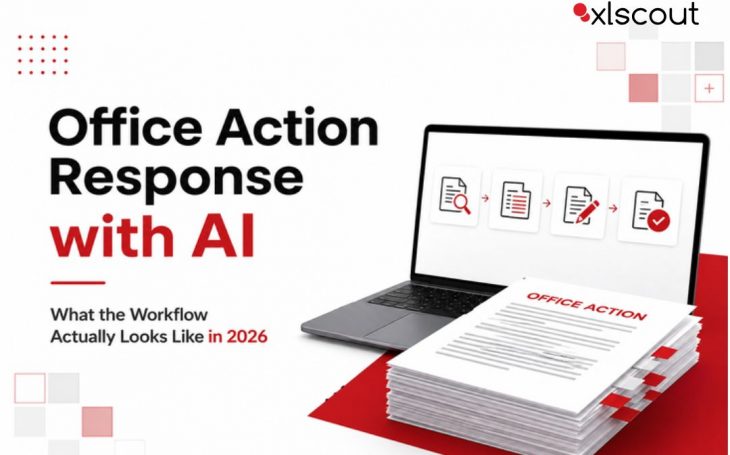
Office Action Response with AI: What the Workflow Actually Looks Like in 2026
Introduction 85% of US patent applications receive at least one office action. For the average IP practice, office action response is not an occasional task — it is a constant workflow that determines prosecution outcomes, shapes claim scope, and drives...

How R&D Teams Use AI to Identify Patent Whitespace Before Filing
Introduction Most R&D teams file patents based on what they have already invented. The teams building the most defensible IP positions are filing based on where the technology landscape is going. AI-related patents are growing 28% year-on-year globally (WIPO 2025)....
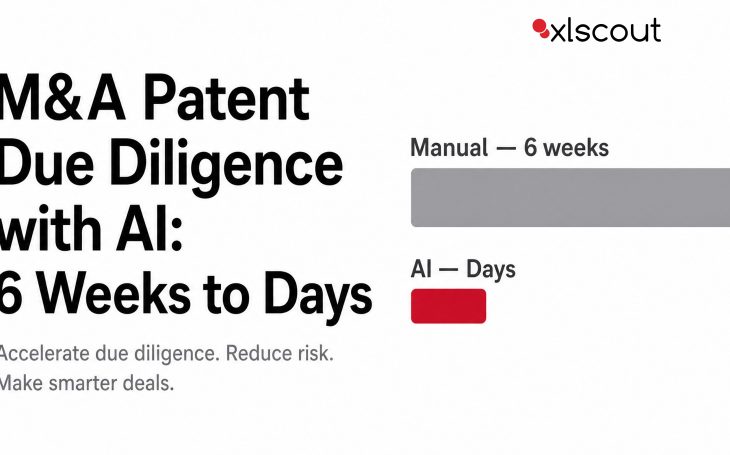
M&A Patent Due Diligence with AI: Compressing 6 Weeks Into Days
Introduction The deal has a 90-day close window. The target company has 500 patents. The IP team has three weeks before the acquisition committee needs a patent risk summary. Traditional patent due diligence for a 500-patent portfolio takes 4-8 weeks....

AI vs Keyword Patent Search: Which Actually Finds More Prior Art? (With Benchmark Data)
Introduction Keyword patent search has a structural flaw. It is called the vocabulary problem. An invention described as a ‘distributed ledger system’ and an invention described as a ‘decentralised transaction record’ are technically identical. A keyword search for one finds...
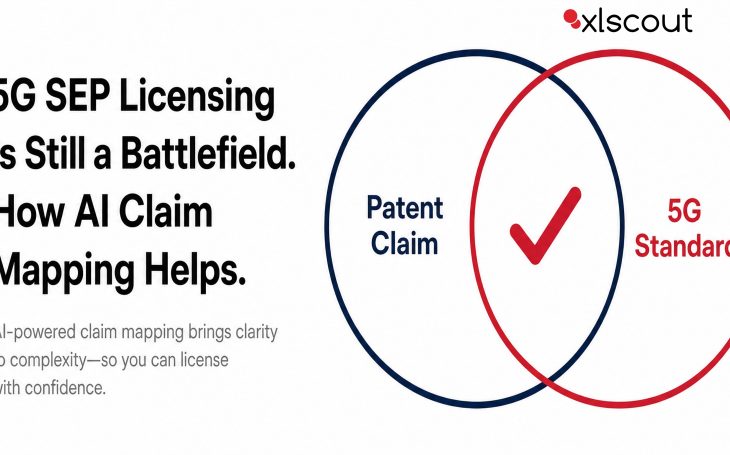
5G SEP Licensing Is Still a Battlefield. Here Is How AI Claim Mapping Changes the Game.
Introduction The 5G standard essential patent licensing dispute is not over. As of 2025, more than 200 active SEP cases were ongoing across the US, EU, India, and China. FRAND rate negotiations that were expected to settle with 5G adoption...