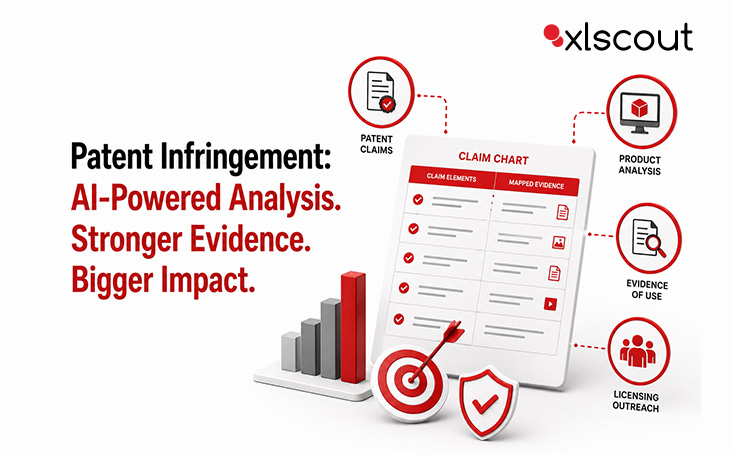
Patent Infringement: How AI Builds Claim Charts, Maps Evidence of Use, and Scales Licensing Campaigns
Introduction Patent claim charts are the foundational document of patent infringement analysis — the structured map that shows how each element of a patent claim reads on a specific product or process. Building a single claim chart manually takes an...

One Product Launch. Four Patent Offices. Why APAC IP Clearance Falls Apart Every Time.
Introduction A semiconductor product designed by a Taiwan fabless company, fabricated at TSMC, using components from Korean and Japanese suppliers, targeting consumer electronics markets in Japan, Korea, the United States, and China. This is not a hypothetical supply chain. It...

DRAM and NAND Patents Are Filed in the World’s Densest Clusters. Are Korean IP Teams Searching Them Properly?
Introduction In most technology domains, a prior art search returns a manageable universe of relevant references. In dynamic random-access memory architecture, 3D NAND flash process technology, and OLED display thin-film transistor design, the relevant universe is an order of magnitude...
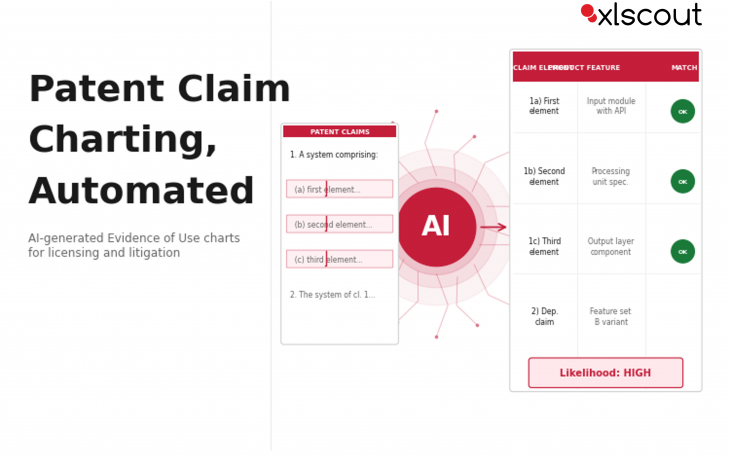
Patent Claim Charting: How ClaimChart LLM Helps IP Teams Build Stronger Evidence of Use Charts
Introduction Patent claim charts are the foundation of patent licensing, enforcement, and litigation. They map each element of a patent claim to a specific feature of an accused product — providing the structured evidence that supports infringement assertions, licensing negotiations,...

AI Patent Portfolio Management: How IP Teams Use XLSCOUT to Build, Prune, and Protect Stronger Portfolios
Introduction A patent portfolio is only as valuable as the strategy behind it. Enterprises spend millions annually on prosecution, maintenance, and annuity fees — yet most portfolios contain a significant proportion of assets that no longer align with business priorities,...
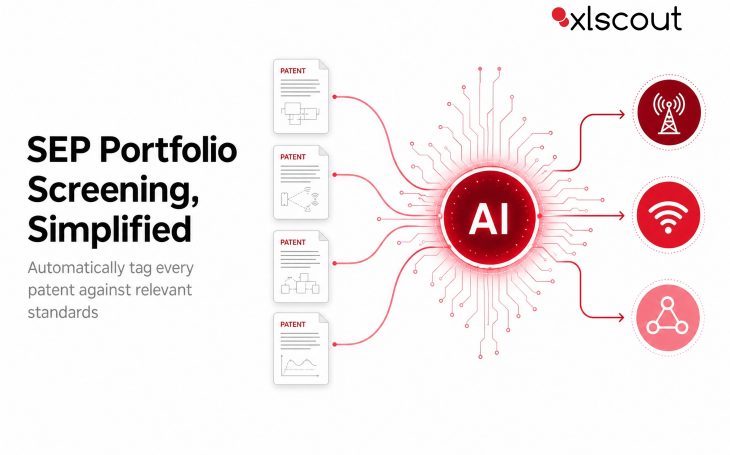
Introducing SEP Tagger in Standigger LLM: Accelerate Standards-Based Patent Screening
Introduction As the number of technical standards continues to grow, identifying patents that may be relevant to industry standards has become increasingly challenging. Traditional SEP screening often involves manually reviewing patent claims against multiple standards documents—a time-intensive process that requires...