Freedom-to-Operate (FTO) Search: A Complete Guide
A freedom-to-operate search identifies in-force patents your planned product might infringe in your target markets. It focuses on granted and pending claims that are still active, not expired patents or general novelty. An FTO search reduces infringement risk before launch....
What Is Freedom to Operate in Patents? A Complete Guide for Product and IP Teams
Introduction Freedom to Operate (FTO): Freedom to operate (FTO) is the determination that a company can manufacture, use, sell, or import a specific product or process in a specific jurisdiction without infringing any valid, enforceable patent claims held by a...

Southeast Asia’s Fragmented IP Landscape: How Singapore-Based IP Teams Use AI for ASEAN Patent Coverage
Introduction There is no ASEAN patent. A product launching across Vietnam, Thailand, Indonesia, the Philippines, Malaysia, and Singapore — a combined market of more than 600 million people and the world’s fifth-largest economy — requires six separate patent filings, in...
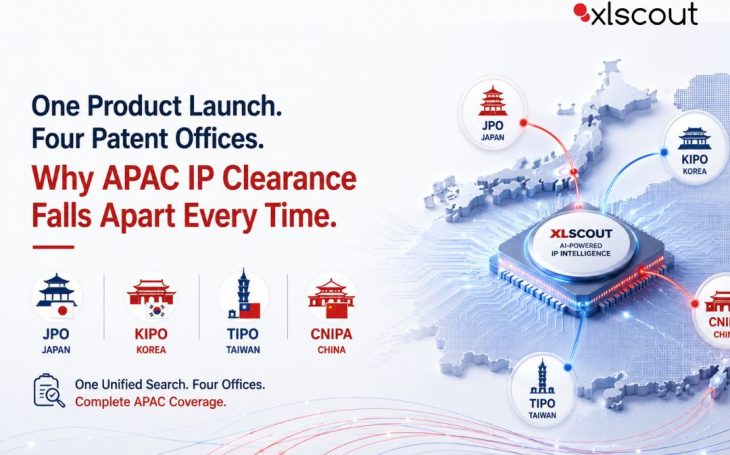
One Product Launch. Four Patent Offices. Why APAC IP Clearance Falls Apart Every Time.
Introduction A semiconductor product designed by a Taiwan fabless company, fabricated at TSMC, using components from Korean and Japanese suppliers, targeting consumer electronics markets in Japan, Korea, the United States, and China. This is not a hypothetical supply chain. It...
The Most Important Prior Art for Taiwan Semiconductor Teams Isn’t in the Claims. It’s in the Drawings.
Introduction Consider the position of an IP team at a fabless chip design company in Hsinchu. They have designed a new integrated circuit — a power management IC with a novel gate driver topology. Before filing at TIPO, they need...
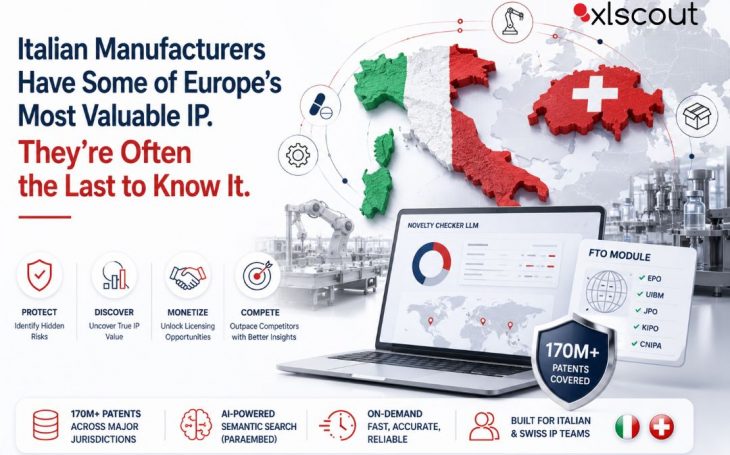
Italian Manufacturers Have Some of Europe’s Most Valuable IP. They’re Often the Last to Know It.
Introduction Italy is not typically the country that comes to mind when European patent strategy is discussed. Germany, France, the Netherlands — these are the names that dominate conversations about European IP. But Italy is the fifth-largest EPO filer in...