

Introduction
Patent intelligence fails when it reaches the wrong person at the wrong level of detail. An R&D director does not need a weekly list of 400 classified patent abstracts. A legal operations team does not need a raw feed of competitor filings sorted by IPC code. What each team needs is patent intelligence that is already filtered, classified, and framed for the decision they are trying to make.
TechScaper LLM is built around that principle: monitor patents, auto-tag them to your taxonomy, and deliver only the useful signals to each team.
What Is IP and R&D Collaboration in Patent Intelligence?
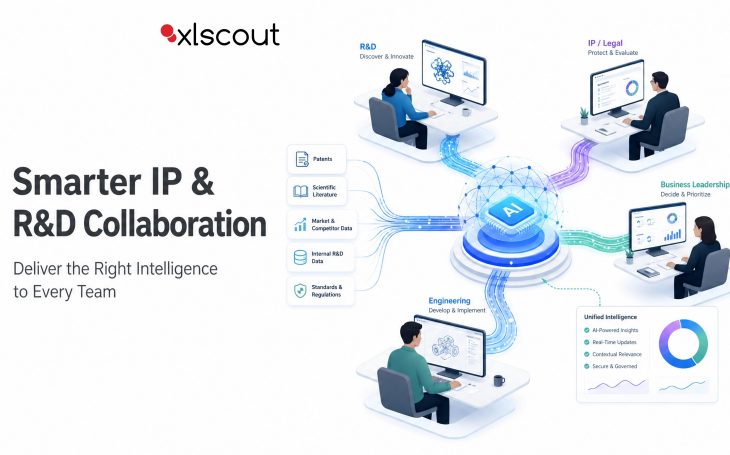
IP and R&D collaboration in patent intelligence means structuring the flow of patent data so that each team in the organisation receives the signals most relevant to their function — and can act on those signals without a dedicated analyst translating between the raw patent data and the strategic decision.
The goal is to make patent intelligence a shared operating layer for IP, R&D, engineering, and legal teams — rather than a specialist function that IP manages in isolation and presents to others as a slide deck twice a year.
Why IP and R&D Collaboration Matters
Most organisations have a structural gap between patent intelligence and product strategy. IP teams know the patent landscape. R&D teams know the technology roadmap. The two bodies of knowledge are rarely in the same conversation at the same time, which means R&D investments are made without full IP context and patent filings are made without full product roadmap context.
Closing that gap has measurable value: reducing R&D risk through early IP signal integration means fewer late-stage redesigns, fewer missed filing opportunities, and better-aligned continuation strategies that protect the products the R&D team is actually building.
The Limits of Traditional Patent Intelligence Distribution
One team owns the data, everyone else waits
In most organisations, patent intelligence is owned by the IP team and distributed to other teams through periodic reports, presentations, or briefing sessions. The other teams cannot access the underlying data, cannot refine the analysis for their specific questions, and are always working from an aggregated view that may not reflect their priorities.
Alert tools send everything to everyone
Patent monitoring alert tools typically route every matched result to a shared email list or inbox. Without role-based filtering, R&D teams receive alerts for legal matters and legal teams receive alerts for technical R&D questions. Nobody has ownership, so nobody acts.
No feedback loop means quality does not improve
When a patent alert is irrelevant, there is no mechanism to communicate that back to the classification system. The same irrelevant alerts continue to arrive next week. Over time, teams stop engaging with the monitoring output entirely.
Collaboration is ad hoc, not structural
When IP and R&D teams do align on patent strategy, it typically happens through scheduled meetings rather than a shared working environment. The collaboration is event-based, not continuous. The decisions made in those meetings lose context as time passes and the IP landscape changes.
How TechScaper LLM Structures Patent Intelligence for Cross-Team Use
TechScaper LLM delivers different views of the same underlying patent intelligence to different teams based on their role, their taxonomy preferences, and their configured confidence thresholds. The underlying data is shared. The interface each team sees is optimised for how they actually use patent intelligence.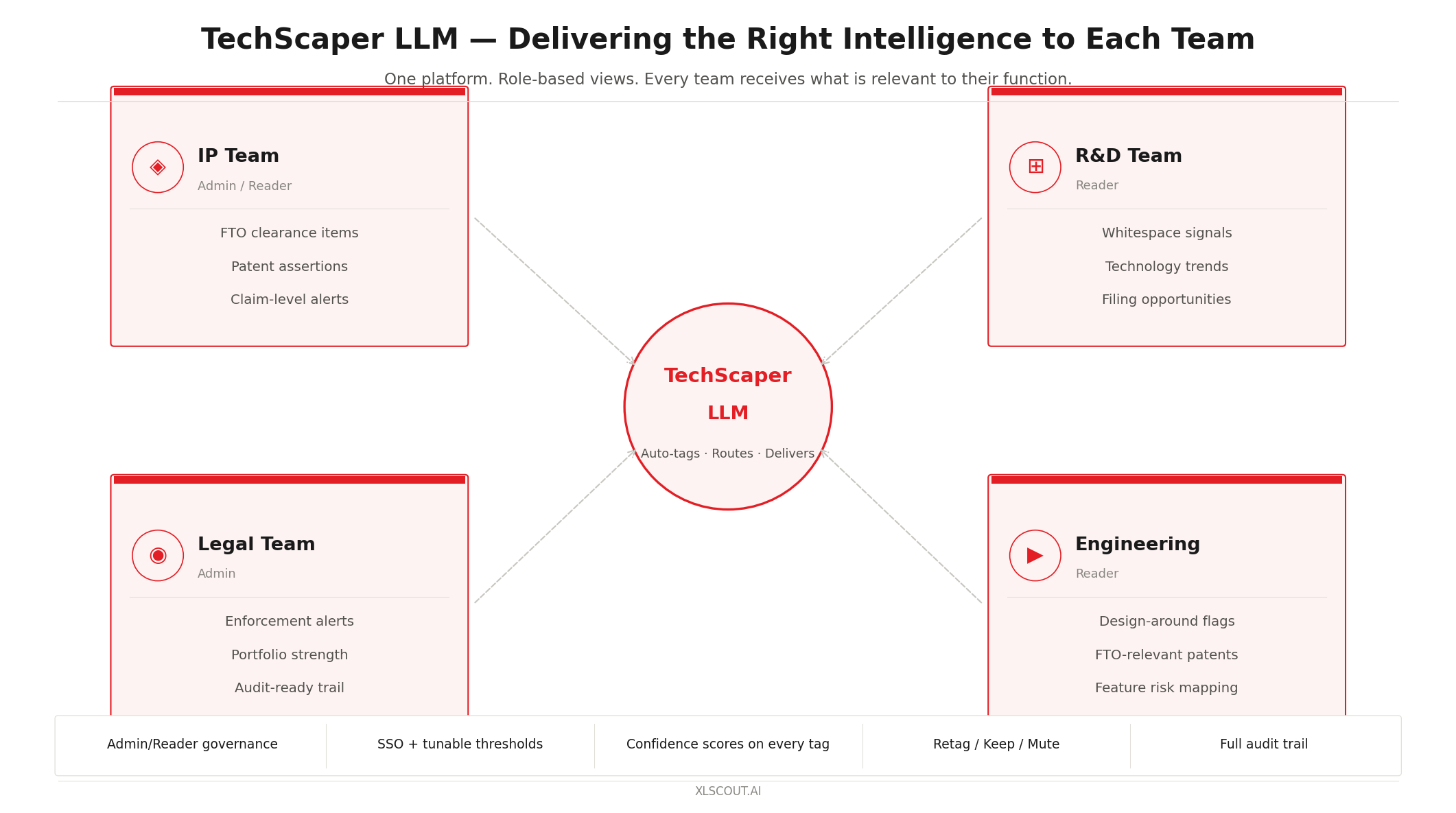
1. Admin and Reader Roles with Tunable Thresholds
TechScaper LLM uses an Admin/Reader role structure that separates configuration from consumption. Admin users control taxonomy definitions, confidence thresholds, competitor watch lists, and approval workflows. They see full detail and manage the classification system.
Reader users receive curated alerts within their configured confidence threshold — only the results most likely to be relevant to their function. They can tune thresholds on their own profiles, view saved search profiles, and access read-only dashboards without being able to change the underlying classification logic. Each team sees what is relevant to them, at the level of detail they need.
2. LLM Auto-Tagging Routes Intelligence to the Right Context
Every new patent publication in the monitoring scope is automatically tagged to the taxonomy and routed based on that classification. A patent filing in EV battery management routes to the powertrain IP team and the battery R&D team. A competitor filing in RF front-end architecture routes to the wireless IP group and the RF engineering team. Routing happens at classification time, not through a manual review process.
Hybrid classification — retrieval-aided LLM with optional CPC/keyword guardrails — ensures that the tagging is both precise and explainable. Each tag comes with a confidence score and the exemplar patents that justify the classification, so teams can see why a result was routed to them.
3. Executive Digest: One View for Strategic Decision-Makers
For IP leadership and R&D management, TechScaper generates a single executive digest: what changed this week, the top movers in monitored technology areas, the competitor watch summary, and any FTO-relevant items that require action. Clean tiles and trend strips. One two-minute read that contains everything leadership needs to stay aligned on the competitive patent picture.
The executive digest format is board-ready by design — the same intelligence that drives day-to-day IP decisions is structured for presentation to senior stakeholders without requiring a separate analysis and formatting exercise.
4. Agentic Workflow with Audit Trail
From any alert or digest entry, teams can act directly within TechScaper: open a review bucket for deeper analysis, notify the responsible owner, flag an item for follow-up, or export to BI platforms for integration with broader strategic intelligence dashboards.
Every action is recorded in a complete audit trail. In-record collaboration means the discussion about a specific patent alert — the decision to act, the rationale, the responsible owner — is stored alongside the patent data itself. Compliance requirements are met. Institutional knowledge is preserved.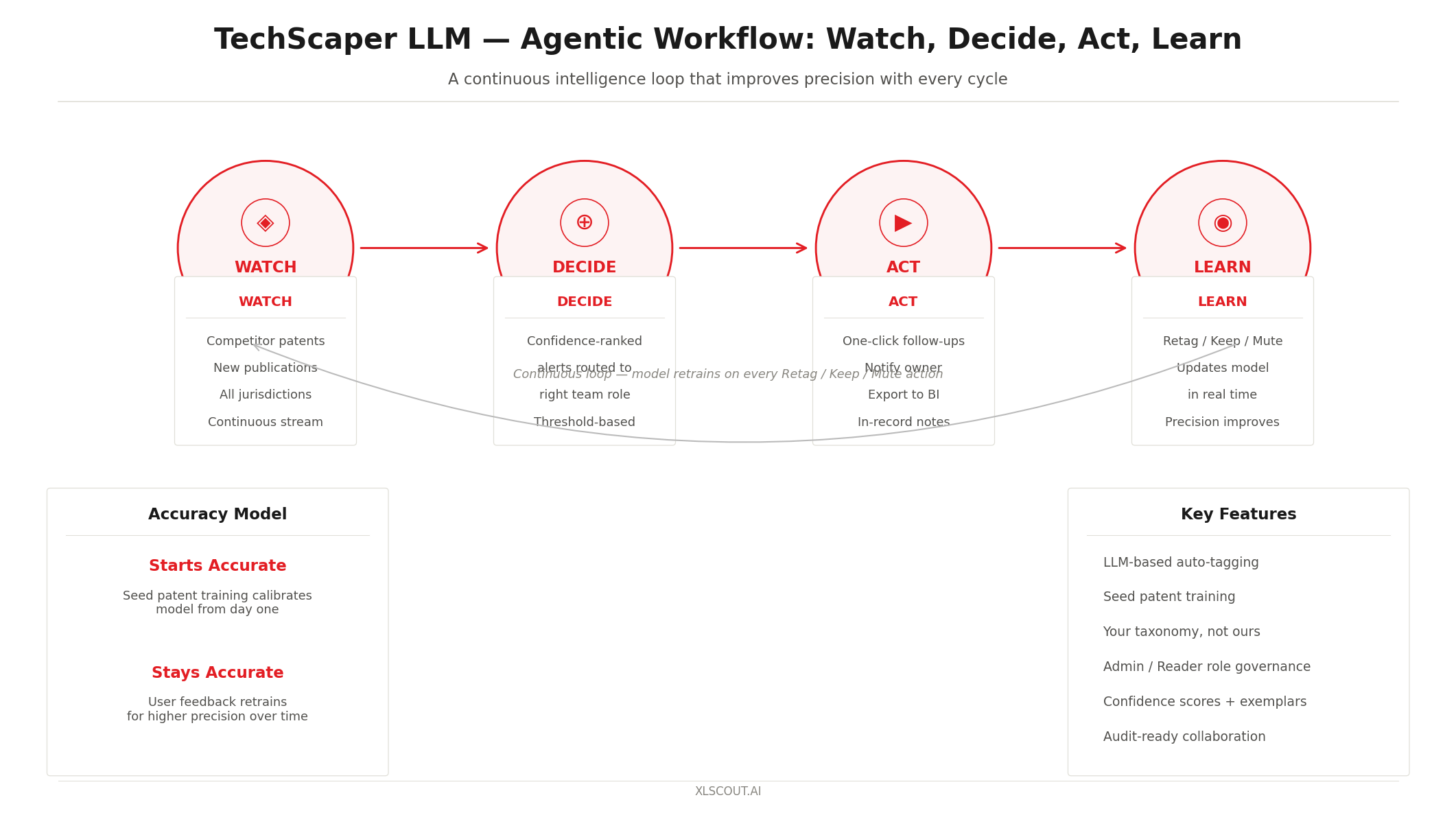
5. Real-Time Feedback Loop: Retag, Keep, Mute
TechScaper’s feedback loop connects team responses to continuous model improvement. When a user marks a result as irrelevant (Mute), confirms it as correct (Keep), or reclassifies it to a different taxonomy node (Retag), that signal immediately updates the view and feeds into model retraining.
The system gets more accurate over time by learning from the actual usage patterns of the teams using it — not from a one-time calibration exercise. This is what TechScaper means by “stays accurate”: precision improves as the model aligns with real-world usage.
Why This Matters for Global IP Operations
Enterprise IP teams managing large patent portfolios across multiple jurisdictions, business units, and technology domains need a monitoring infrastructure that can deliver relevant intelligence at scale without requiring a proportional increase in analyst headcount. TechScaper LLM provides that infrastructure.
The IP ↔ R&D collaboration model that TechScaper supports — shared taxonomy, role-based views, continuous feedback, audit trail — is the operational foundation for treating patent intelligence as a real-time input to strategic decisions rather than a periodic briefing that arrives too late to act on.
Why XLSCOUT Stands Out
- Admin/Reader role governance with SSO and tunable thresholds per profile
- LLM auto-tagging routes intelligence to the right team automatically
- Confidence scores and exemplars make every classification explainable
- Executive digest: one two-minute summary for leadership
- Agentic workflow: watch → decide → act → learn in one interface
- Real-time feedback loop: Retag / Keep / Mute updates model continuously
- Audit-ready collaboration with complete in-record audit trail
- Your taxonomy, not ours: classification system reflects your IP and R&D structure
Patent intelligence is most valuable when it reaches the person making the decision before the decision is made. TechScaper LLM is designed to make that the default — not the exception.
See How TechScaper LLM Supports IP and R&D Collaboration Workflows
If your organisation wants to structure patent intelligence as a shared operating layer rather than a specialist IP function, TechScaper LLM makes the collaboration infrastructure operational.