


The UPC Is Live: How European IP Teams Are Using AI to Monitor, Assert, and Defend Under the Unified Patent Court
Introduction For the first time in the history of European patent law, a single patent action can determine the fate of a patent across 18 EU member states simultaneously. The Unified Patent Court has been operational since June 2023, and...

Australia and New Zealand Patent Strategy: How AI Prior Art Search Addresses the Limits of AusPat and IP Australia
Introduction Australian innovators in mining technology, agricultural technology, medical devices, and clean energy are filing more patents than at any point in the country’s history. IP Australia processed more than 35,000 patent applications in 2025, with the highest growth in...

Southeast Asia’s Fragmented IP Landscape: How Singapore-Based IP Teams Use AI for ASEAN Patent Coverage
Introduction There is no ASEAN patent. A product launching across Vietnam, Thailand, Indonesia, the Philippines, Malaysia, and Singapore — a combined market of more than 600 million people and the world’s fifth-largest economy — requires six separate patent filings, in...
India’s Patent Office Is Evolving Fast: How AI Prior Art Search Helps IP Teams Filing at the CGPDTM
Introduction India is the world’s third-largest pharmaceutical patent filer. Its technology sector — centred in Bangalore, Hyderabad, and Pune — is generating an accelerating volume of software, semiconductor, and AI patent applications. Its regulatory environment for patent prosecution has undergone...
IP Commercialization with AI: Find Licensing Partners, Value Technology, and Drive Revenue
Introduction IP commercialization — converting patent assets into revenue — is one of the highest-value activities an IP team can undertake. It is also one of the most systematically underperformed. Industry estimates suggest fewer than 20% of corporate patents generate...
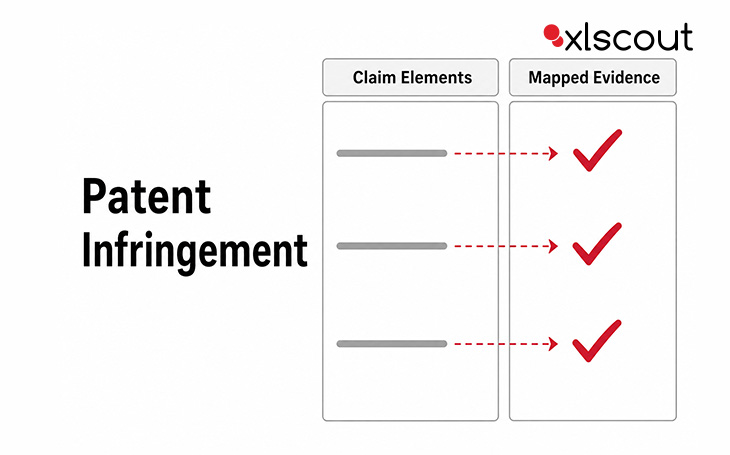
Patent Invalidity: How AI Structures Prior Art Search, Generates §102/§103 Analysis, and Automates Claim Mapping
Patent invalidity analysis is not one workflow. It is three simultaneous workflows — and the outcome depends on how well they are coordinated A prior art search that finds the right reference but cannot map it to the asserted claim...