
Australia and New Zealand Patent Strategy: How AI Prior Art Search Addresses the Limits of AusPat and IP Australia
Introduction Australian innovators in mining technology, agricultural technology, medical devices, and clean energy are filing more patents than at any point in the country’s history. IP Australia processed more than 35,000 patent applications in 2025, with the highest growth in...

Southeast Asia’s Fragmented IP Landscape: How Singapore-Based IP Teams Use AI for ASEAN Patent Coverage
Introduction There is no ASEAN patent. A product launching across Vietnam, Thailand, Indonesia, the Philippines, Malaysia, and Singapore — a combined market of more than 600 million people and the world’s fifth-largest economy — requires six separate patent filings, in...
India’s Patent Office Is Evolving Fast: How AI Prior Art Search Helps IP Teams Filing at the CGPDTM
Introduction India is the world’s third-largest pharmaceutical patent filer. Its technology sector — centred in Bangalore, Hyderabad, and Pune — is generating an accelerating volume of software, semiconductor, and AI patent applications. Its regulatory environment for patent prosecution has undergone...

CIP Patents: How AI Identifies New Claim Opportunities, Builds Patent Families, and Maximises Portfolio Coverage
A granted patent is a starting point, not a finish line. The most defensible IP positions are built from patent families — parent patents extended through continuations and continuation-in-part applications that follow technology development and block competitive workarounds. Most companies...
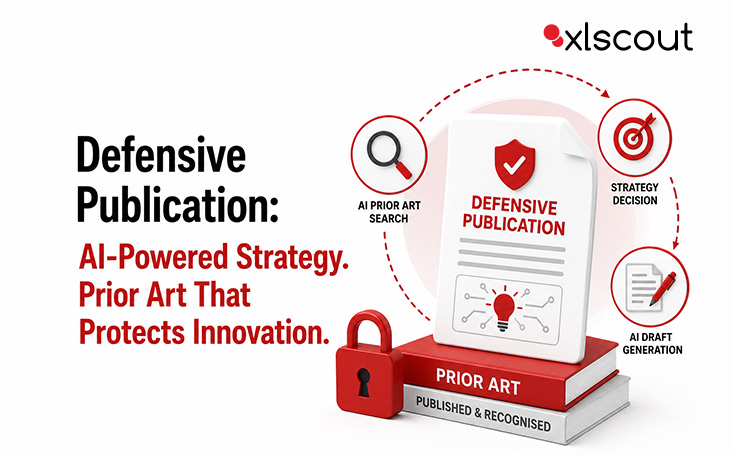
Defensive Publication: How AI Helps IP Teams Choose the Right Strategy, Draft Prior Art, and Protect Innovation Cost-Effectively
Introduction Not every invention needs a patent. And not every invention that does not need a patent should be left unprotected. Defensive publication is the third option that most IP teams underuse — the deliberate disclosure of an invention to...

Technology Scouting: How AI Accelerates Emerging Tech Discovery, IP Landscape Mapping, and White Space Identification
Introduction Your R&D team has a brief: identify which emerging technologies are worth pursuing, which competitors are filing in adjacent domains, and where the open filing territory is. That is three separate workflows — traditionally three separate engagements — each...